
Strengthening the HIV response through African leadership and global collaboration
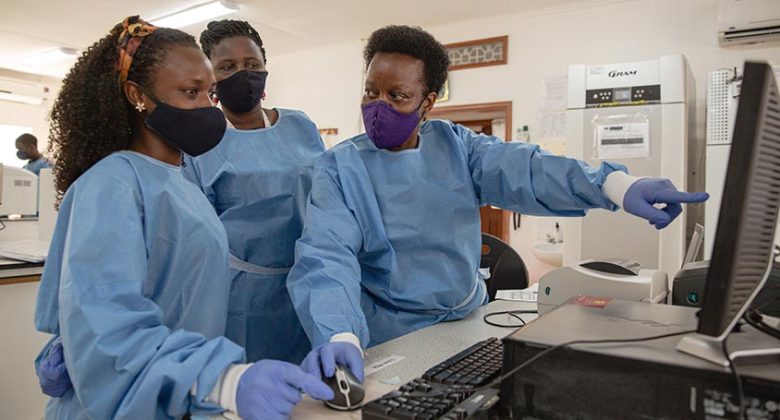
As the world marks World AIDS Day 2025, we reflect on the progress made and the ongoing challenges that remain in the fight against HIV/AIDS. The recent shifts in international research funding highlight a critical truth: overcoming HIV/AIDS requires both sustainable global commitment and locally driven solutions. By supporting collaborative research, strengthening the research ecosystem, and empowering African scientists and communities through EDCTP-funded research, we are helping to build a more sustainable, inclusive, and effective global HIV response.
A changing funding landscape
Recent shifts in international funding for HIV research have deeply impacted the global response to HIV/AIDS. Maintaining progress demands a strengthened clinical research ecosystem, especially in countries most affected by the disease. Continued investment and collaboration are essential to ensure that innovative treatments, diagnostics, and prevention reach those who need them most.
The role of the EDCTP programmes
EDCTP continues to play a pivotal role in the HIV/AIDS response. Through its second programme (EDCTP2), €132 million has been invested to support 73 HIV research projects, from large-scale international collaborations to empowering African scientists to lead their own research. Its successor, Global Health EDCTP3, has invested €39 million since 2021 to support 11 HIV-related research projects, further strengthening regional and global HIV/AIDS response.
Advances in paediatric HIV treatment: the CHAPAS studies
Children living with HIV in Africa have long faced limited treatment options. The CHAPAS-4 study, which involved nearly 1,000 children aged 3-15 in Uganda, Zambia and Zimbabwe, showed that new combinations of backbone drugs containing tenofovir alafenamide (TAF) provided the best clinical outcomes, while dolutegravir was the best-performing anchor drug. The results provide strong evidence supporting WHO recommendations on second-line treatments for children with HIV.
Building on this, the CHAPAS-5 study, supported by Global Health EDCTP3, will further evaluate both oral and injectable antiretroviral regimens. The study includes a strong focus on social and community engagement to ensure that new regimens are practical, acceptable, and tailored to real-world settings.
Protecting bone health in HIV-positive youth
Beyond antiretroviral treatment, young people living with HIV (8-16 years) often face musculoskeletal challenges due to the virus and certain treatments. The VITALITY project is assessing whether supplementing with vitamin D3 and calcium carbonate can strengthen bones, improve muscle mass, and enhance immune function The trial results, shared at the International AIDS Conference in 2024, demonstrated that in three quarters of trial participants who started the study with low D levels, high-dose vitamin D plus low-dose calcium had a significant positive impact on total body (less head) BMD Z score and lumbar spine BMD Z score compared with placebo. This safe, cheap, and readily available intervention may boost bone accrual enough to help youngsters with HIV reach peak bone mass high enough to reduce fracture risk later in life, a potential game-changer for long-term health and well-being for young children and adolescents living with HIV.
African-led innovation in HIV prevention
African-led research is driving the next generation of HIV prevention tools. The CAP012 SAMBA project, coordinated by CAPRISA, has conducted three sequential and interlinked clinical trials evaluating broadly neutralising antibodies (bNAbs) for long-acting, woman-controlled prevention. Findings show that fixed-dose subcutaneous administration is safe, simplifies logistics, and is acceptable to participants, offering a new hope for scalable, user-friendly prevention solutions that empower African women.
Notably, the CAP012 SAMBA project is also investing in research capacity—training African scientists, mentoring postgraduate researchers, and establishing a local analytical platform for advanced HIV research on the continent.
Speeding up diagnosis and treatment in infants
Early diagnosis and treatment are critical to saving infants’ lives. The LIFE Study’s point-of-care testing, performed by nurses in rural health centres, has shown that rapid diagnosis and antiretroviral therapy initiation are both feasible and effective. Their ongoing work includes evaluating cost-effectiveness and practical aspects of scaling up these interventions across Africa.
Building African scientific leadership
EDCTP programmes have placed a strong emphasis on strengthening local research capacity and developing scientific leadership. Professor Catherine Orrell exemplifies this commitment. Professor Orrell, an EDCTP Fellow, is a distinguished clinician and clinical pharmacologist who has carried out innovative HIV research since 2002 at the Desmond Tutu HIV Centre and the University of Cape Town, South Africa. She has led multiple studies focusing on the efficacy, toxicity, interactions, and dosing of antiretroviral treatments. Starting as an EDCTP Career Development Fellow under EDCTP1, she later received a Senior Fellowship Plus grant under EDCTP2, allowing her to further research on retention in care, extending an NIH-funded study exploring methods to more rapidly identify patients showing signs of poor adherence to antiretroviral therapy in resource-limited settings in South Africa. The fellowship has also enabled Prof. Orrell to mentor and facilitate the research of a rising researcher, Dr Olaposi Olatoregun, who is conducting a pilot study to explore whether a medication adherence app can improve adherence and retention in antiretroviral treatment programmes among newly diagnosed adolescents living with HIV in Benue State, Nigeria.
In February 2025, Dr Orrell was appointed as the new Unit Director of the HIV and Other Infectious Diseases Research Unit (HIDRU) at the South African Medical Research Council.
On this World AIDS Day, another EDCTP Senior Fellow, Dr Marion Sumari-de Boer, is organising a final dissemination event for the REMIND studies. The REMIND-KID project studies the effect of a customised digital adherence tool on retention in care and adherence to antiretroviral treatment for children and adolescents living with HIV in Tanzania and Rwanda. The fellowship also emphasises capacity building by supporting two MSc students, two PhD students and two postdoc researchers in becoming leaders in the field of digital health and mixed methods research.