
From clinic to command: How the EDCTP IDEA Fellowship grant shaped a public health leader in Uganda
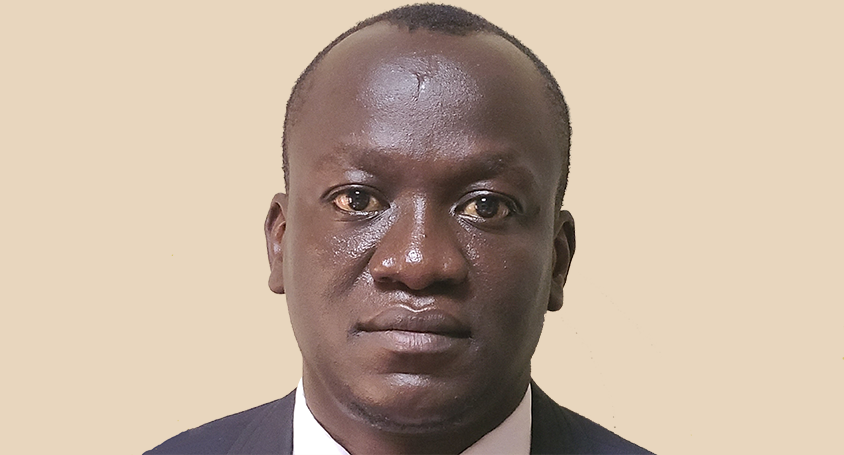
In Easter Uganda, one doctor’s transition from the hospital ward to the heart of emergency coordination is helping redefine how the country prepares for and responds to public health threats.
Dr William Okiror, a Public Health Specialist with over a decade of experience in clinical care, research, and public health emergency preparedness and response, began his career as a Medical Officer at Mbale Regional Referral Hospital. Like many clinicians, his day-to-day work focused on treating individual patients in a health facility. However, the growing disease outbreaks and emerging health threats in Uganda revealed a bigger challenge: the need for leaders who can translate clinical expertise into population-level action.
This opportunity arrived in April 2022, with the announcement of the IDEA Fellowship programme call. The programme is part of the EDCTP and the Africa CDC initiative to support consortia providing Master’s-level training in epidemiology and biostatistics. For Dr Okiror, the fellowship represented a timely opportunity for a new kind of leadership in public health.
“The IDEA Fellowship has been a game changer—enhancing my analytical, coordination, and leadership skills, and transforming my view of health systems from facility-based care to population-level resilience,” he reflects.
Transitioning from clinical medicine to epidemiology
After being selected for the IDEA Fellowship, Dr Okiror was placed at the Mbale Regional Emergency Operations Centre (REOC) for his field placement. Established in 2020 during the COVID-19 pandemic, Mbale REOC was Uganda’s first regional emergency operations centre, designed to coordinate real-time responses to disease outbreaks and other public health emergencies across Eastern Uganda.
During his placement, Dr Okiror has helped coordinate responses to multiple public health emergencies, including cholera, Ebola, Rift Valley Fever, rabies outbreaks, as well as natural disasters across the region. He also developed a strong interest in the One Health approach, which recognises the interconnectedness of human, animal, and ecosystem health. This interest led him to conduct an investigation of a suspected rabies outbreak, which later formed the basis of his Master’s mini-thesis.
Rising leadership
Recognising his growing leadership and technical expertise, the Hospital Director of Mbale Regional Referral Hospital seconded Dr Okiror to serve as Operations Manager of the Mbale Regional REOC— a position he still holds. The Mbale REOC covers 17 districts across Eastern Uganda and serves as a model and Centre of Excellence for multisectoral emergency coordination.
In this role, he oversees a team of 10 technical officers and reports to the Heads of Community Health and the Hospital Director. His responsibilities span preparedness and response coordination, technical supervision of districts, data analysis and weekly epidemiological bulletin production, capacity building of One Health teams, and organisation of simulation exercises, conducting 7-1-7 early action and after-action reviews.
During active outbreaks, his team supports districts to compile situation reports, spot reports, 4W (Who, What, Where, When) partner matrices, and response plans. These tools ensure that decision-makers have timely, accurate information and that partners on the ground are well coordinated.
Systems strengthening
The impact of Dr Okiror’s fellowship experience extends well beyond his own career trajectory. Under his leadership, Mbale REOC has gained national recognition as a regional hub for emergency preparedness. This success has inspired the establishment of 13 additional Regional Emergency Operations Centres across Uganda, helping to decentralise emergency preparedness and response and bring decision-making closer to affected communities.
The power of mentorship and institutional support
Behind these achievements is strong mentorship and institutional collaboration. Dr Okiror credits much of his growth to the guidance and support he received during the fellowship.
He acknowledges the mentorship of Professor Peter Olupot-Olupot, IDEA Fellowship Coordinator at Busitema University, and the continued institutional support from Busitema University, Mbale Clinical Research Institute, Mbale Regional Referral Hospital, and the IDEA Consortium. Together, these partners created an enabling environment for him to apply new skills, take on leadership roles, and drive change.
“I am deeply grateful to EDCTP and the IDEA Consortium for this transformative opportunity. The fellowship bridged my transition from clinical medicine to field epidemiology and opened pathways for national leadership in emergency preparedness and response,” he says.
Dr William Okiror’s journey shows the profound impact that targeted fellowships can have—not only on individual professionals, but on entire health systems. By equipping clinicians with skills in field epidemiology, data analysis, coordination, and leadership, programmes like the IDEA Fellowship help countries build resilient systems capable of anticipating, detecting, and responding to public health threats.