
CAPTURE-1 study advances development of a novel single-dose malaria treatment
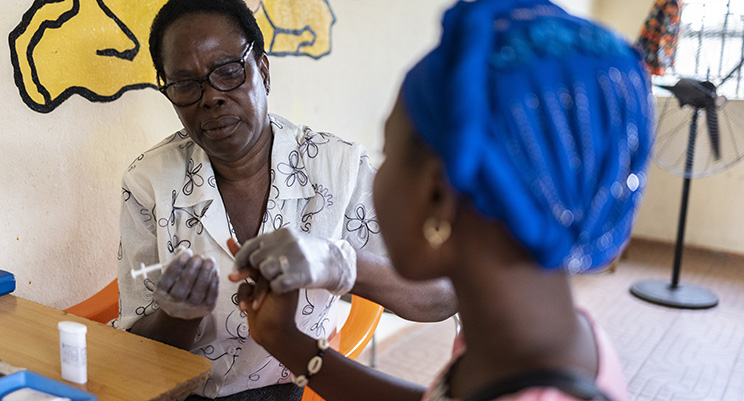
A clinical study funded under the EDCTP2-funded PAMAfrica project has reported encouraging results for a novel antimalarial combination therapy that could contribute to addressing one of the greatest challenges in malaria control: the emergence and spread of resistance to current treatments.
The findings, published in The Lancet Infectious Diseases, describe the results of the Phase 2a CAPTURE-1 study, which evaluated a single oral dose of cabamiquine combined with pyronaridine for the treatment of uncomplicated Plasmodium falciparum malaria in adults and adolescents.
An innovative, non-artemisinin-based treatment approach
Current first-line malaria treatments rely on artemisinin-based combination therapies (ACTs). However, the increasing emergence of artemisinin resistance threatens recent gains in malaria control, highlighting the urgent need for new medicines with different mechanisms of action.
The cabamiquine–pyronaridine combination represents an innovative approach by combining two compounds with complementary mechanisms of action in a single-dose, non-artemisinin regimen. Cabamiquine is a first-in-class inhibitor of Plasmodium falciparum elongation factor 2 (PfeEF2), a novel molecular target not exploited by currently approved antimalarial medicines yet. Pyronaridine, an established antimalarial, was selected as the partner drug because of its long half-life and complementary mode of action, helping to reduce the risk of resistance emerging against the new compound.
The possibility of delivering a treatment as a single oral dose also represents an important innovation. Simplifying treatment regimens can improve patient adherence, particularly in resource-limited settings where completing multi-day treatments can be challenging, while maintaining effective parasite clearance.
Promising proof-of-concept results
The CAPTURE-1 trial enrolled 38 participants in Gabon and Uganda. The study demonstrated that the cabamiquine–pyronaridine combination was generally well tolerated, with no serious adverse events or deaths reported. PCR-corrected efficacy at Day 28 exceeded 90% in both study cohorts, providing proof of concept that this novel combination has the potential to become an effective treatment for uncomplicated P. falciparum malaria. Clinical development of this new therapeutic approach will continue, including studies to optimise dosing and evaluate the treatment in children and other vulnerable populations.
“PAMAfrica has shown what can be achieved when motivated partners work together. Cabamaquine is a remarkable molecule because it acts against several stages of the parasite. In combination with pyronaridine, it could be a medicine suitable for all patients, including pregnant women. That makes it a real breakthrough.”
Dr Timothy Wells, Chief Scientific Officer of MMV, Switzerland, and the coordinator of the PAMAfrica consortium
EDCTP support for innovation against malaria
The CAPTURE-1 study was supported under the PAMAfrica project which is co-funded through the EDCTP2 programme, supported by the European Union, and the Swedish International Development Cooperation Agency (Sida). Merck KGaA is the sponsor and co-funder of the CAPTURE-1 trial. The project, which is led by Medicines for Malaria Venture (MMV) and brings together partners from Europe and Africa, aims to accelerate the development of innovative antimalarial medicines through collaborative clinical research.
Supporting the development of new tools to combat drug-resistant malaria remains a priority for EDCTP. Studies such as CAPTURE-1 demonstrate the importance of sustained investment in innovative clinical research to expand the pipeline of next-generation malaria treatments and contribute to improved health outcomes in sub-Saharan Africa.
“The CAPTURE-1 study demonstrates how EDCTP-supported partnerships can accelerate the development of next-generation malaria treatments through collaborative clinical research to address major global health challenges. This novel, single-dose, non-artemisinin combination therapy represents a promising step towards expanding the pipeline of effective tools needed to support malaria control and elimination.”
Dr Montserrat Blázquez-Domingo, Senior Project Officer at the EDCTP Association, Netherlands
Publication details
Safety, pharmacokinetics, and antimalarial efficacy of single-dose cabamiquine–pyronaridine combination therapy for the treatment of adults and adolescents with acute uncomplicated Plasmodium falciparum malaria (CAPTURE 1): a prospective, multicentre, open-label, phase 2a study
Mombo-Ngoma G, Adoke Y, Manego R et al.
The Lancet Infectious Diseases, 2026; 0