
ICI3D Programme secures Global Health EDCTP3 grant to strengthen infectious disease modelling capacity in sub-Saharan Africa
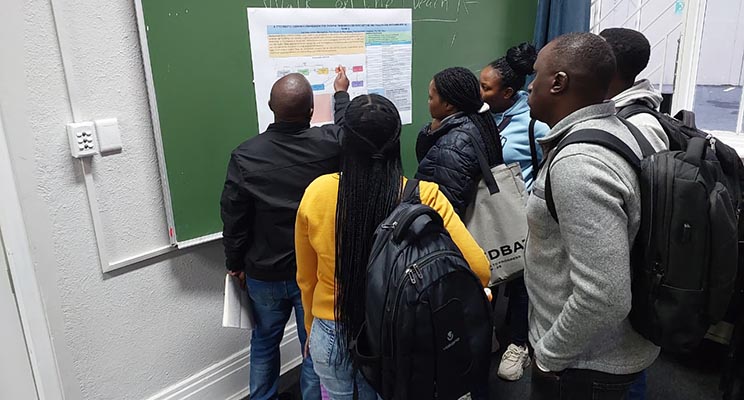
The International Clinics on Infectious Disease Dynamics and Data (ICI3D) programme has been awarded €1.3 million in funding from Global Health EDCTP3 to strengthen regional capacity for infectious disease modelling and promote its use in policymaking, effective 1 May 2026.
The three-year project brings together six partners from South Africa, Kenya, Belgium and the Netherlands — the EDCTP Association (Coordinator), Stellenbosch University, the University of Nairobi, the University of Cape Town, the University of Antwerp, and the AIMS Trust — to address the shortage of skilled infectious disease modellers across sub-Saharan Africa through an expanded regional training hub.
This initiative will strengthen sub-Saharan Africa’s infectious disease modelling capacity by delivering two annual training clinics, expanding a peer alumni network, and launching a Modelling Clinic Accelerator to establish new training sites — ultimately contributing to stronger, more evidence-informed public health decision-making across the region.
Addressing a critical skills gap in infectious diseases modelling
Mathematical modelling has become a valuable tool for those planning health services, particularly programmes relating to infectious disease. It can be used to forecast future disease trends and evaluate the potential impact of interventions — analyses that inform prioritisation, resource allocation, and other programmatic decisions.
Realising this potential requires both skilled researchers able to span mathematical modelling and infectious diseases, and policymakers with a solid grasp of how modelling can apply to their areas of responsibility. Currently, there is limited experience of infectious disease modelling within sub-Saharan Africa and limited practical application to enhance public health — a gap this project is designed to close.
Building capacity through regional training hubs
The ICI3D Programme strengthens regional capacity for infectious disease modelling by building on the foundation laid by the existing International Clinics on Infectious Disease Dynamics and Data. Since their launch in 2009, these clinics have trained more than 850 professionals and researchers.
The project will deliver two updated annual clinics, strengthen the alumni network, and launch a Modelling Clinic Accelerator to replicate the ICI3D model across the region:
- Meaningful Modelling of Epidemiological Data (MMED): a two-week in-person course in Cape Town, South Africa, tailored to quantitative researchers and focused on data-driven infectious disease modelling.
- Dynamical Approaches to Infectious Disease Data (DAIDD): a one-week in-person course in Nairobi, Kenya, tailored to public health professionals and researchers with limited prior mathematical expertise, introducing dynamic modelling approaches.
The team is working with European partners to embed health economic methodologies into each course. Courses will include modular lectures, interactive coding demonstrations, and computer practicals, with materials developed under FAIR and open-source principles and continuously refined to align with current public health priorities. The objective is to train at least 50 participants per year, including 10 from ministries of health or national public health institutes.
The project also aims to build a peer network of modelling experts — in the ICI3D model, teaching faculty are alumni who have taken on mentoring, teaching and leadership roles — supported by an online alumni forum offering continuing education webinars, career development opportunities, and collaborative research initiatives. A ‘Modelling Clinic Accelerator’, using a train-the-trainer model, will establish two additional training programs in the region.
“Modelling gives you the ability to look around corners: to ask what might happen if a disease spreads unchecked, or how different interventions compare before you commit resources to one of them. That is an enormously valuable capability. The problem is that it requires a rare combination of mathematical and epidemiological skills, and that combination is still in short supply across much of sub-Saharan Africa.”
Dr Cari van Schalkwyk, Director, ICI3D, Stellenbosch University
Scaling a proven training model
The ICI3D Programme is not starting from scratch — it is scaling up something that has already proved to work. Fifteen years of evidence sit behind the existing clinic model, and the new investment will expand its reach, establish new training sites across the region, and build the infrastructure to keep producing modelling specialists continuously, well beyond the life of this project.
The Programme brings together teaching faculty from Africa, Europe and North America. At its core is African-led expertise built over 15 years — researchers who understand the region’s disease priorities, data constraints and policy environment. International partnerships extend that foundation, adding methodological breadth and a global network; sustainability beyond the funding period rests on this combination of local ownership and international collaboration, reinforced by the alumni network and Accelerator model described above.
“This grant allows us to scale a proven training model and build a stronger community of infectious disease modellers in sub-Saharan Africa. By investing in local expertise, we are helping countries make faster, evidence-based decisions to protect public health.”
Ms Nuraan Fakier, Project Officer, EDCTP Association
Contributing to regional and global priorities
The ICI3D Programme will significantly expand infectious disease modelling capacity in sub-Saharan Africa and promote its application to address public health challenges. It will:
- Increase the number of researchers with up-to-date skills in infectious disease modelling.
- Provide continuing professional development opportunities for modelling specialists.
- Create a self-sustaining ecosystem to maintain the supply of infectious disease modelling experts.
- Encourage greater use of modelling and health economic analyses within national health systems.
Collectively, these activities will boost the use of infectious disease modelling in sub-Saharan Africa, strengthening countries’ ability to respond to and prevent key infectious disease threats — in line with national and regional public health strategies and Global Health EDCTP3’s objectives.
By scaling up a training model with 15 years of proven impact, the ICI3D Programme will leave sub-Saharan Africa with a stronger, self-sustaining pipeline of infectious disease modelling expertise — benefiting researchers, institutions, and the policymakers who rely on modelling to guide public health decisions long after this project concludes.
Background
The EDCTP Association acts as the Coordinator of several projects under Global Health EDCTP3 actions that use lump sum funding. As Coordinator, the Association is responsible for facilitating communication between the consortium and Global Health EDCTP3, financial administration by ensuring prompt distribution of payments to beneficiaries, submitting required reports and deliverables, and overseeing effective project management with the Scientific Project Leader.
The ICI3D Programme is supported by Global Health EDCTP3 and its members.