
International Clinical Trials Day 2026: EDCTP2 clinical research transforming lives across Africa
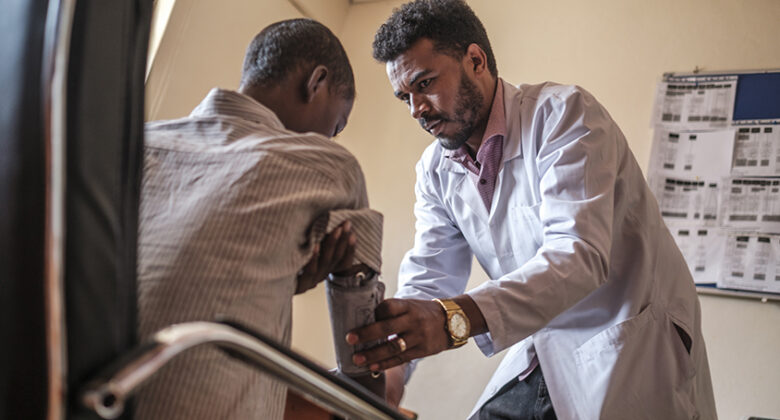
On International Clinical Trials Day 2026, the EDCTP Association celebrates the science that saves lives and the people who make it possible: community workers, patients and volunteers, researchers, health workers, and policymakers working together to support clinical trials across Africa. As ‘Research Rising’ continues, the Association remains committed to ensuring that high-quality clinical research in Africa leads to faster access to safe, effective and affordable interventions for those who need them most.
Through its second EDCTP programme (EDCTP2), the Association has supported 150 trials, many of which are making major advances in the development of new and improved medical interventions against poverty-related and emerging infectious diseases in sub-Saharan Africa—including HIV/AIDS, malaria, tuberculosis (TB), neglected tropical diseases, diarrhoeal diseases, and lower respiratory tract infections.
From evidence to impact
A core aim of EDCTP2 has been to advance the development of medical interventions through all phases of clinical trials, with particular emphasis on phase II and III trials that generate the evidence to inform regulators and policymakers. Many EDCTP2-supported trials have now produced results that are:
- Informing global and national policy recommendations
- Enabling licensing and label extensions
- Supporting the introduction of new interventions into routine care across Africa.
Key milestones include:
- A successful phase II study of the R21/Matrix-M malaria vaccine paved the way for a pivotal phase III trial, regulatory licensing and a WHO recommendation
- Data from the AMBITION-cm trial led to an updated WHO recommendation for treating fungal brain infections in people with HIV, improving survival prospects in high-burden settings.
- Trials led by the PAMAfrica Consortium showed that Coartem® Baby, a child-friendly formulation of artemether–lumefantrine, achieves drug levels sufficient to kill malaria parasites. The formulation was granted authorisation from Swissmedic in 2025 and WHO prequalification in April 2026, and is already in use in Africa to treat babies.
- Following a pivotal phase III trial and implementation study led by the Pediatric Praziquantel Consortium, the first pre-school-aged children in Africa began receiving praziquantel for schistosomiasis in 2025.
- Trials conducted by the HAT-r-ACC project showed that fexinidazole, a highly potent oral drug, was effective against a severe acute form of HAT in East Africa. Fexinidazole is now included in WHO treatment guidelines.
Supporting the licensing of new interventions
EDCTP2-supported research has also played an important role in advancing newly licensed or label-extended interventions through national regulatory approvals and global mechanisms, including EMA’s EU-M4all procedure, the US FDA, Swissmedic and WHO prequalification.
- The STOP Consortium has developed a fixed-dose combination (FDC) tablet of ivermectin and albendazole for parasitic worm infections. The dispersible, child-friendly formulation received a positive scientific opinion from the EMA in 2025 and a first national regulatory approval in 2026.
- Studies from the MoxiMultiDoseMod project generated data supporting a label extension of moxidectin for onchocerciasis (river blindness), enabling treatment of children as young as four years.
Large phase III trials: demonstrating impact
Large phase III trials provide the key evidence that a new intervention both works and is safe. These data support regulatory decisions and inform global guidance and decision-making.
- A multicentre phase III trial coordinated by the WANECAM2 Consortium showed that GanLum, a combination including ganaplacide – a novel antimalarial with a new mechanism of action – was almost 100% effective at treating malaria infections. If licensed, it would be the first new type of malaria treatment in decades.
- The MAMAH study (Gabon, Mozambique) and IMPROVE-2 (Kenya, Malawi) showed that dihydroartemisinin–piperaquine (DHA–PPQ) is suitable for malaria prevention in pregnant women living with HIV who are taking cotrimoxazole, providing a much-needed prevention strategy for a highly vulnerable group.
- The EMPIRICAL project has found that adding valganciclovir, a treatment for cytomegalovirus infections, to standard antibiotic treatments for pneumonia significantly reduced the risk of death in young infants, improving the life prospects of this age group.
- The PediCAP study showed that it was safe to switch hospitalised young children with severe pneumonia from injectable to oral antibiotics, enabling earlier discharge, benefiting children, households and health systems.
- The VITALITY study showed that vitamin D and calcium carbonate supplements significantly improved bone mineral density in vitamin-D-deficient adolescents living with HIV. Such supplementation could offer a simple and cheap way to reduce the risk of bone fractures and improve quality of life in this group.
From promising research to pivotal trials
Positive trial results at earlier stages can be critical in “go/no-go” decision-making, determining whether promising medical interventions progress.
- In The Gambia, the ETEC Vaccine Efficacy project showed in a phase II trial that ETVAX, a vaccine against enterotoxigenic coli (ETEC), significantly reduced ETEC diarrhoea and also reduced all-cause moderate to severe diarrhoea, suggesting cross-protection against other pathogens. ETVAX has now advanced to phase III.
- The PanACEA Consortium has contributed to a positive phase I evaluation of BTZ-043, a novel TB drug now in phase Ib and II trials in South Africa.
- The PREPARE project generated promising phase II data on two candidate vaccines against group B streptococci (GBS), a major cause of neonatal sepsis and infant death in sub-Saharan Africa.
- The 5FC-HIV-Crypto project is developing an easier-to-use formulation of flucytosine (5FC) for cryptococcal meningitis in people with HIV. Results from a successful phase I trial enabled the formulation to be refined ahead of ongoing phase II studies in Malawi and Tanzania.
Closing evidence gaps
Policy recommendations are made based on available data. However, these data are sometimes limited, particularly for African populations and special populations such as pregnant women, children and people with co-morbidities, who are often underrepresented or excluded in pivotal trials. EDCTP2-funded studies are helping to close these gaps.
- The CHAPAS-4 study found that two new antiretroviral combinations containing tenofovir alafenamide (TAF) and dolutegravir were superior to existing treatments. The findings supported the WHO recommendation of dolutegravir-based combinations as the preferred second-line option for children, and suggest that TAF-based combinations could also be used as second-line treatments.
- A large pragmatic phase IV study of Pyramax (pyronaridine–artesunate), as part of the EDCTP-supported Central African Network on Tuberculosis, HIV/AIDS and Malaria (CANTAM), confirmed its very high effectiveness, reinforcing a WHO recommendation on its use. An analysis of trial data also showed that Pyramax is effective against other, less common Plasmodium species, including malariae and P. ovale, as well as mixed infections, meaning that treatment could be used without the need to type malaria infections.
Ensuring real-world impact
Regulatory approvals and policy recommendations are key milestones – but they are only the first steps. To ensure that new interventions reach all who need them and are used optimally, EDCTP2 also supports post-licensing (phase IV) studies and product-focused implementation research.
- The DREAMM study has shown that a new clinical pathway for assessing potential brain infections in people with HIV improves survival in routine practice.
- The Revive IPTp and OPT-SMC projects have identified practical strategies to enhance the use of antimalarial drugs for prevention in vulnerable groups.
- The MULTIPLY project demonstrated that seasonal malaria chemoprevention could be integrated with routine childhood vaccination services, reducing malaria burden in children. The project has led to changes in programme delivery in participating countries.
Supporting the next generation of research leaders
A key feature of EDCTP’s approach is its commitment to long-term capacity strengthening and African leadership. Support for clinical trials is combined with investments in infrastructure and people, so that EDCTP2-funded projects leave a lasting legacy—such as trial sites able to take part in additional clinical studies and an increased capacity of countries to assess and introduce new medical interventions to benefit their populations.
The EDCTP2 fellowship programme has supported a new generation of leaders who are turning purpose into possibility as they research promising medical interventions and how to bring them to patients. In response to gender disparities on the African continent, and with financing from the UK, EDCTP2 has supported PhD training programmes specifically for women. These programmes were implemented through the four EDCTP Regional Networks of Excellence in Central, East, Southern and West Africa, which provided an outstanding training and mentorship environment for the fellows.