
Investing in women to advance science for women
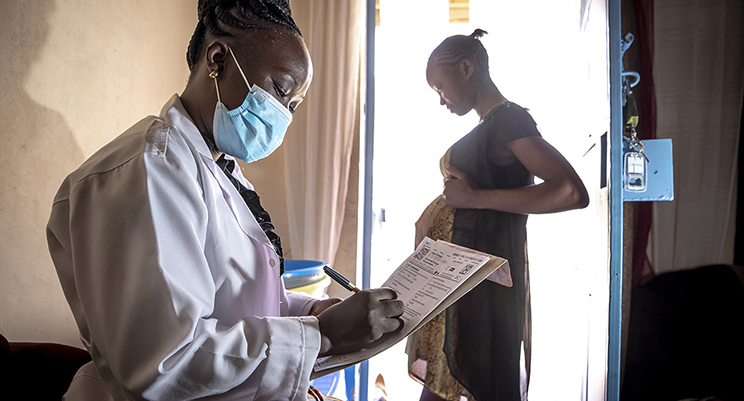
On this International Women’s Day, the EDCTP Association celebrates the women scientists, clinicians, mentors and community partners whose contributions are transforming health outcomes for women. Their work highlights an important truth: when we give – by sharing opportunities, resources and recognitions – we all gain, through stronger science, more resilient health systems, and healthier communities.
Driving gender equity in research
Investing in women’s leadership, scientific excellence and equitable partnerships leads to better outcomes for women’s health. For this reason, gender equity has been a clear priority in EDCTP2.
This commitment is reflected across the programme. Women take a leading role in 40% of EDCTP2-supported projects in Europe and Africa. Gender balance in our evaluation procedures helps ensure that diverse scientific perspectives are considered, with women providing just under 40% of all reviews.
Among the 600 African academic trainees supported (Bachelor’s, Master’s, PhD), around 46% are women, helping to build the next generation of scientific leaders. Notably, 40% of EDCTP2 Fellows are women, reflecting their growing role as emerging research leaders. A recent bibliometric analysis showed that 40% of co-authors on EDCTP2-funded publications were women, with them leading 55% of these publications.
Improving women’s and maternal health
An important focus of EDCTP2 is research that directly benefits women’s and maternal health.
Studies such as IMPROVE-2 and MAMAH showed that adding dihydroartemisinin–piperaquine to standard prophylaxis significantly reduced malaria risk in pregnant women with HIV, a finding that could influence policy and improve both maternal and newborn outcomes.
Preliminary findings from the PYRAPREG study indicate that pyronaridine–artesunate (Pyramax®) is safe and effective for treating uncomplicated malaria in pregnant women in the second and third trimesters, with no detected interactions with antiretroviral therapy in women living with HIV.
Building capacity for maternal vaccine research
EDCTP2 is supporting large cohort studies that underpin future maternal vaccine trials.
The PeriCOVID-Africa and PREPARE studies followed pregnant women and infants to understand the impacts of COVID-19 and other infections, such as group B streptococcus, on maternal and neonatal health, and to inform future vaccine research. These generate vital data on maternal outcomes, immune responses and neonatal risks, informing vaccine development and maternal immunisation strategies.
Celebrating women scientists who “Give to Gain”
This International Women’s Day, EDCTP highlights eight outstanding women leaders whose work advances science while directly improving health for women and girls.
Dr Kwame Shanaube leads the Zambart Research Unit in Zambia, a recipient of the EDCTP Outstanding Research Team Prize 2025. Her team conducts high-impact TB and HIV research, prioritising community engagement and mentoring early-career scientists, especially women.
Professor Rashida Ferrand, the winner of the EDCTP Outstanding Female Scientist Prize 2025, is a pioneer in HIV and adolescent health in sub-Saharan Africa, her research informs policies and services that particularly benefit adolescent girls and young women.
Professor Marieke M. van der Zalm, the winner of the EDCTP Scientific Leadership Prize (Sub-Saharan Africa Woman) 2025, is an expert in paediatric respiratory diseases, she improves diagnosis and care for children and adolescents, while building African research networks and mentoring young women scientists.
Dr Katharina Kranzer, recipient of the EDCTP Scientific Leadership Prize (European Woman) 2025, is a leader in TB and HIV implementation research, she develops better diagnostic and care models in high-burden settings and promotes fair European–African research partnerships.
Professor Vivi Maketa is an EDCTP Career Development Fellow and research leader in the Democratic Republic of the Congo. She has worked to strengthen malaria research and clinical capacity, improve care for pregnant women and children, and train many emerging women scientists.
Dr Raquel Gonzalez is a Research Leader at ISGlobal, Spain. She focuses on malaria in pregnancy, advancing prevention and case management to reduce maternal anaemia, low birth weight and other complications, in close partnership with African institutions.
Professor Margaret Gyapong, recipient of the EDCTP Outstanding Female Scientist Prize in 2020, is a champion for equity in health research. She has worked to improve access to tools that reduce the burden of malaria and neglected tropical diseases and used her prize funds to provide scholarships for women.
Professor Marleen Temmerman, who received the EDCTP Outstanding Female Scientist Prize in 2016, is a globally recognised leader in women’s, adolescent and child health and rights, with extensive experience in HIV and reproductive health research.