
Yes! We can end TB: EDCTP Association’s impact in Africa and beyond
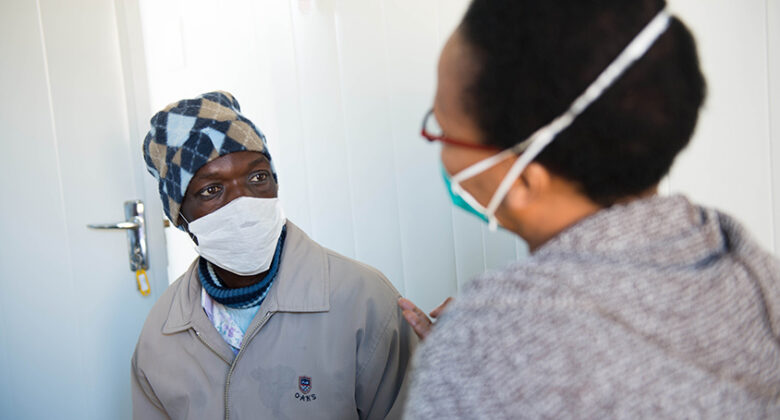
Tuberculosis (TB) remains one of the world’s leading infectious killers. Yet across sub-Saharan Africa, growing research capacity, infrastructure and expertise are driving efforts to end TB. On World TB Day 2026, EDCTP Association’s portfolio highlights how sustained, strategic investment can transform the TB response, strengthen African leadership, and translate ambition into impact. It shows that ending TB – led by countries, powered by people, and driven by science from Africa – is an achievable goal.
Strategic investment in TB research
The second EDCTP programme (EDCTP2)’s strategic business plan emphasises the importance of addressing unmet medical needs in tuberculosis research. It prioritises:
- Innovative TB diagnostic methods, particularly point-of-care tests that identify drug resistance
- Shorter, safer treatment regimens and new combinations
- Better understanding of how TB interacts with other diseases.
Between 2014 and 2026, EDCTP2 has invested €215.50 million in collaborative clinical studies on TB, capacity building and talent development. According to the 2024 Report on TB Research Funding Trends, a publication of the Treatment Action Group, EDCTP2 is the fourth largest public funder of TB research and the eighth largest funder of TB research overall.
Transforming TB diagnostics
Early, accurate diagnosis is fundamental to stopping transmission and improving outcomes. EDCTP2 has prioritised point-of-care diagnostics, particularly those that can rapidly identify drug resistance and be delivered in primary care and community settings.
The TB-CAPT CORE study provides the strongest evidence to date that decentralising molecular TB testing to primary health care clinics in sub-Saharan Africa is both feasible and highly impactful, significantly shortening the time to treatment initiation.
The XACT studies have pioneered active case-finding using molecular TB diagnostics (the Xpert platform), including through battery-operated equipment deployed in low-cost vans to reach communities with limited health infrastructure. The XACT-III study is assessing how well this approach can be implemented in multiple African countries.
Building on this, the XACT-19 project is investigating whether computer-assisted X-ray diagnosis of TB (TB-CAD) can be used as a triage tool, identifying individuals with likely TB who can then undergo confirmatory molecular testing. This approach could reduce the number of molecular tests that need to be performed and be more cost-effective.
Accelerating better treatments
EDCTP2 is also driving innovation in TB treatment, particularly for drug-resistant disease and for people with co-morbidities.
The bEto-TB public-private partnership, supported by EDCTP2, GlaxoSmithKline and BioVersys SAS, has developed a novel combination of alpibectir and ethionamide (AlpE) which can maintain or even improve antibacterial activity while minimising intolerability — addressing one of the key barriers to wider use of ethionamide in resistant TB. The European Medicines Agency has granted orphan designation for AlpE, and follow-on funding from the Innovative Health Initiative’s UNITE4TB project is supporting its progression into late-stage clinical trials.
Within the PanACEA Consortium, EDCTP2-funded clinical trials have revealed two promising antibiotics, sutezolid and delpazolid, as potential safer alternatives to the drug linezolid for TB treatment, especially for patients requiring extended therapy.
As non-communicable diseases rise in high-burden countries, EDCTP2 is supporting research on TB in people with conditions such as diabetes. The PROTID project (supported under EDCTP2 and Global Health EDCTP3 programmes) in Tanzania and Uganda is the first-ever large-scale randomised controlled trial of preventive treatment for TB in people with diabetes and latent tuberculosis infection. The study will generate crucial information to guide policy and practice regarding the prevention and management of combined TB and diabetes.
Influencing policy on TB
EDCTP2-funded studies on TB have been referenced in key WHO guidelines and policy documents. Data generated by the DIAMA project, for example, which is exploring how a range of tools for detecting multidrug-resistant TB could be implemented within African health systems, has contributed to revised guidelines on TB diagnosis.
In addition, the DATURA project was highlighted in a recent WHO document, The Advanced HIV Disease Research Landscape. The DATURA is evaluating an intensified, high-dose TB treatment regimen for hospitalised patients with HIV and TB co-infections, to address the very high mortality rate in such patients.
The EDCTP2-funded RaPaed TB project brought together a multidisciplinary consortium of experts to evaluate promising new diagnostic tests for childhood TB. Performance data on these tests are supporting the establishment and refinement of WHO guidelines on TB diagnostics for children and have been shared to inform the ongoing WHO-review for the Guideline Development Group (May 2024).
Advancing TB vaccines
New vaccines are essential to ending TB. EDCTP2 has played a key role in advancing MTBVAC, a promising alternative to BCG. Phase II studies in South Africa have shown MTBVAC to be highly immunogenic, with the two highest doses tested generating immune responses significantly higher than those elicited by BCG. Additional trials are now underway to assess MTBVAC’s efficacy in infants, adolescents and adults, including the EDCTP2-funded MTBVACN3 phase III study in newborns in Senegal, Madagascar and South Africa.
To complement these investments, EDCTP and the Amsterdam Institute for Global Health and Development (AIGHD) co-developed the Global TB vaccine R&D roadmap. The roadmap identifies research and implementation priorities to coordinate and accelerate global action on TB vaccines. A review of the roadmap, published in The Lancet Infectious Diseases on 18 March 2026, showed progress in advancing TB vaccine research, while also highlighting critical gaps and barriers that still need to be addressed.
Building African leadership to fight TB
A key feature of EDCTP’s approach is its commitment to long-term capacity strengthening and African leadership. Clinical trial support is coupled with investments in infrastructure and people. PanACEA and SIMPLICI-TB have strengthened microbiology and biomarker research capacity in countries such as Gabon and Malawi, enabling them to participate in complex TB drug trials.
EDCTP2’s fellowship programme has supported 47 EDCTP Fellows working on TB. Many now occupy leading roles in Africa in tuberculosis research. Some examples include Dr Mareli Claassens (Namibia), who is conducting a detailed investigation of drug-resistant TB in hotspots of this dangerous pathogen, including among disadvantaged ethnic minority populations. In 2021, Dr Claassens was appointed a member of the Global Young Academy, a body that aims to give a voice to the rising stars of scientific research. In the same year, she was awarded a Harvard LEAD Fellowship for Promoting Women in Global Health, an initiative run by the Harvard Global Health Institute and the Global Health and Population Department within the Harvard TH Chan School of Public Health
The EDCTP Senior Fellow Professor Novel Chegou (Stellenbosch University, South Africa) is the Project Scientist of the TriageTB site in South Africa. He was also part of previous EDCTP-funded projects, AE-TBC and ScreenTB. The AE-TBC project identified a set of biomarkers associated with TB meningitis, a potentially fatal mycobacterial infection of brain tissue. In his Senior Fellowship project, Professor Chegou is working with colleagues in the Engineering Department of Stellenbosch University to develop a biomarker-based point-of-care test for TB meningitis in children, the most severe form of the disease. He was recently elected a fellow of the African Academy of Sciences, recognising his scientific leadership and impactful research on tuberculosis, particularly his work on biomarkers to improve diagnosis and patient care in resource-limited settings.
Professor Grant Theron (Stellenbosch University, South Africa) is a former EDCTP Senior Fellow and Career Development Fellow and an emerging authority on TB diagnostics. He leads the EDCTP2-funded Cough Audio triaGE for TB (CAGE-TB) project, which is developing an innovative, inexpensive cough audio classifier to identify missing (undiagnosed) TB cases. Global Health EDCTP3 programme is now providing further funding to support the continuation, and successful delivery of this project, under the new name of 4-CAGE-TB, after disruption of the original project due to COVID-19.
Dr Stellah Mpagama is one of sub-Saharan Africa’s leading experts on the interplay between TB and non-communicable diseases (NCDs), such as type 2 diabetes. She was supported through her PhD studies within the EDCTP-funded PanACEA consortium, and later awarded an EDCTP2 Senior Fellowship to investigate ways to protect patients from the side effects of certain TB medications. She now leads a large team in Tanzania working on TB and other infections, exploring health systems challenges as well as disease mechanisms and treatments. She is the principal investigator of the OptiRiMoxTB trial, part of the EDCTP2-funded SIMPLICI-TB project, which is evaluating a shortened TB treatment regimen.