
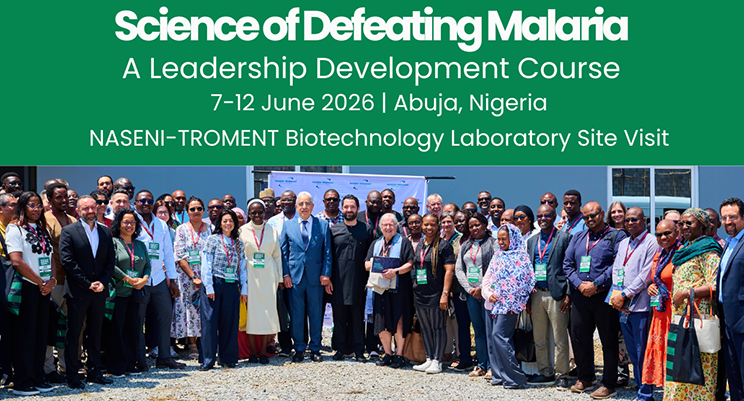
Science of Defeating Malaria: empowering African women leaders
From 7–12 June 2026, Abuja, Nigeria, hosted 65 malaria leaders from 35 countries for the Science of Defeating Malaria: A Leadership Development Course — an intensive weeklong programme equipping mid-career professionals with the skills and networks needed to drive malaria eradication.
Now transitioned to African academic leadership and led by the Harvard T.H. Chan School of Public Health, the course brings together global health experts, researchers and policymakers to translate cutting-edge scientific evidence into actionable, context-specific strategies. The curriculum spans malaria biology, vector control, treatment protocols, resistance, genomics, case management, data modelling, policy and vaccines. All sessions are grounded in a framework of Sub‑National Tailoring, recognising that successful malaria elimination demands solutions adapted to local epidemiology, health systems and communities.
Science of Defeating Malaria is more than a technical training; it is a leadership development experience. Participants work through real-world challenges, learn from peers across regions and disciplines, and strengthen their ability to bridge the gap between research and implementation. Many leave with a clearer vision of what it will take to end malaria and a practical roadmap to influence policy and practice at home.
Dr Olusola Ayoola of the Nigerian Federal Ministry of Health and Nigerian representative at the EDCTP Association General Assembly attended the opening ceremony on behalf of EDCTP and delivered a keynote address.
EDCTP is a proud supporter of the Malaria Leadership Course. After first sponsoring the Ghana edition in 2024, EDCTP has deepened its commitment to both scientific excellence and gender equity by sponsoring all women attendees from malaria-endemic countries for the 2026 course in Nigeria — a total of 19 women from 16 African countries. This investment is helping to build a new generation of African women leaders in malaria, better equipped to shape national and regional responses and move the world closer to a malaria-free future.