
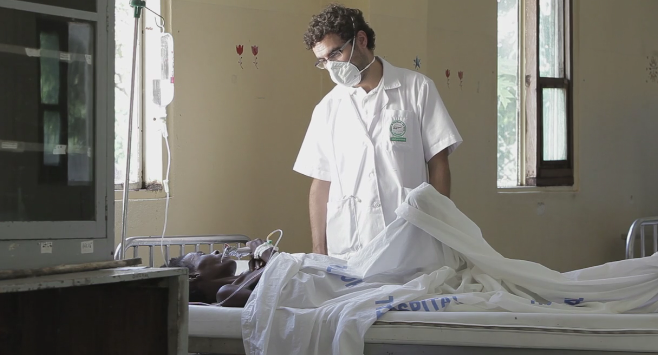
Stool4TB study: Advancing non-sputum diagnostics for tuberculosis in vulnerable populations
Tuberculosis (TB) remains a leading infectious cause of death worldwide, with children and people living with HIV (PLHIV) disproportionately affected. Diagnosing TB in these groups is particularly challenging due to difficulties in sputum collection and the limited sensitivity of conventional tests. The Stool4TB project addressed this gap by evaluating an innovative stool-based quantitative PCR (qPCR) assay as a potential point-of-care diagnostic.
Conducted over five years in high TB/HIV burden settings in Mozambique, Eswatini, and Uganda, the study enrolled 1,967 participants with presumptive TB, including 1,290 children under eight years of age and 677 adults living with HIV. The stool qPCR assay showed moderate specificity in both adults and children, highlighting the challenges of establishing a reliable reference standard in these populations. At the same time, the test detected additional positive cases beyond those identified by conventional methods, suggesting a potential incremental diagnostic yield, particularly among severely immunocompromised adults. However, sensitivity was modest—especially in children—and concordance with established reference tests was limited. Ongoing genomic sequencing analyses aim to clarify the clinical relevance of these additional detections (such as non-tuberculous mycobacteria or other signals not captured by current diagnostics).
Published analyses from the Stool4TB collaboration and related diagnostic research provide further context. A multicentre prospective study of the stool Xpert MTB/RIF Ultra assay among adults living with HIV found that while sensitivity against a composite reference standard was modest (~24%), specificity was high (~94%). The assay detected additional TB cases beyond conventional diagnostics, particularly in individuals with low CD4 counts, suggesting its potential role as a supplementary diagnostic tool in this population. Preliminary work from a sub-study in children without HIV showed that the urine TB-LAM antigen test had low sensitivity (~16%) but offered insights into how sample collection practices may influence TB-LAM specificity.
A series of studies from Stool4TB’s social sciences work packages showed that stool sampling is feasible and acceptable in routine care, offering a practical alternative where sputum collection is difficult. The Stool4TB team recently published a qualitative assessment of healthcare providers’ perspectives on stool-based qPCR TB diagnostics in Manhiça District, Mozambique. Researchers found that providers generally viewed stool testing as easy to perform and valuable for patients who struggle to produce sputum, while also highlighting potential barriers related to health education, resource availability, and misconceptions about stool sampling. These findings provide important evidence to inform diagnostic development, national TB strategies, and future WHO guidance, helping to advance equitable, non-invasive TB diagnosis for vulnerable populations.
Beyond evaluating the diagnostic accuracy of stool qPCR, the project established a well-characterised cohort of children under eight and adults living with HIV with presumptive tuberculosis, creating a platform for future diagnostic research through a comprehensive biorepository of samples and images. This platform also integrated feasibility research through a social sciences component, strengthened research capacity by training young researchers, and supported infrastructure development. Together, these efforts represent one of the most comprehensive assessments of stool-based TB diagnostics to date and have established a robust, long-term collaboration between the participating institutions.